
LOADING
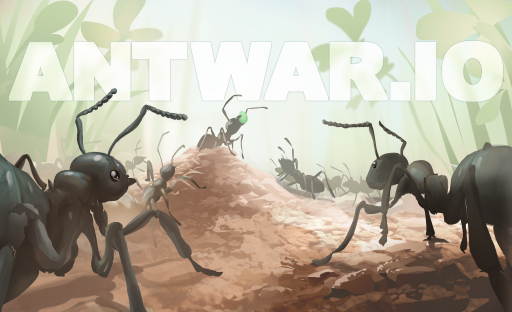
AntWar.io is a fun multiplayer IO game where you play as an ant. Defend your colony and defeat your enemies. Build your ant empire and work with other players to win. AntWar is the best ants .io game available for free, better than all other online ant games!
Forage for food, hunt for bugs and insects, defend your queen, and grow your colony. AntWar.io is inspired a bit by other ant games, but a lot of the inspiration comes from ants in real life. Ant wars, aphid farming, etc. are all something ants do naturally!
If you are interested in learning more about ants or ant keeping check out r/antkeeping on Reddit.
AntWar.io is owned and developed by Bombsight Games. We can be contacted there or by emailing .
Feel free to contact us with ideas you may have!
It’s the friction. The physical weight. The ritual of opening the disc tray, blowing on the contacts, pushing the power button with your toe. The BIOS chime used to mean anticipation —the two seconds between boot and the PlayStation logo when anything was possible. Now it means verification . The emulator checked the hash of your BIOS file. It matches. Proceed.
Because the ePSXe BIOS is not nostalgia. It is second-hand memory . You are not remembering your own childhood—the Christmas morning, the controller cord stretched across the carpet, the glare on a CRT television. You are remembering someone else’s. You are running a perfect facsimile of a machine you may never have owned, using a copy of a copy of a copy, to play games you probably still have in a box somewhere.
But the disc drive in your PC can’t read them. They are scratched. Or you lost the case. Or you sold the console in 2003 for forty dollars to buy a GameCube. epsxe bios
That is the magic trick. That is the deep cut. The ePSXe BIOS does not boot a console. It boots a feeling . It is a séance conducted in code. You are calling up the ghost of a dead platform, and the ghost answers not from a chip in Japan but from a folder on your SSD. The chime is the same. The grey screen is the same. But the context has rotted away.
So you download the .iso . The .bin . The .cue . You mount them virtually. You configure the plugins—Pete’s OpenGL2 Driver, Eternal SPU—and you tweak the resolution until Crash Bandicoot looks wrong, too sharp, the polygons like origami. And then you launch the game. It’s the friction
So the next time you load ePSXe, listen to the chime. Not for nostalgia. Listen for the sadness in it. That sound was born on a motherboard in Tokyo in 1993, meant to be heard by a child in Ohio in 1996. Instead, you are hearing it at 3 AM in a studio apartment in 2026, through laptop speakers, while a browser tab quietly streams something else.
Because you are not holding a grey box from 1994. You are holding a laptop from 2013, or 2020, or yesterday. Your thumbs are not pressing rubbery buttons with colored shapes. They are tapping cold plastic keys. The BIOS you loaded is not a chip. It is a dump . A copy. A file some stranger ripped from their own console twenty-five years ago, uploaded to a GeoCities page, and forgot. The BIOS chime used to mean anticipation —the
That is what the ePSXe BIOS truly is: a permission slip. A key to a door that no longer exists. You turn it, the door opens, and you step into a hallway that only looks like your bedroom in 1998. The carpet is different. The light is wrong. But the game— Suikoden , Xenogears , Castlevania: Symphony of the Night —plays exactly as you remember. Better, even. Save states. Fast forward. Cheats.