We do not think of Amazon as a museum. We think of it as a warehouse—a place where objects go to be stored, priced, and shipped. But in the digital age, a warehouse is also a kind of memory palace. Every product listing is a tombstone for a desire: the hiking boots you almost bought, the cast-iron skillet that promised to change your life, the strange children’s toy with the inexplicably blank stare. And at the center of each listing is the image. The perfect, sterile, glowing image.
To save an image from Amazon is to perform a small act of defiance against planned obsolescence. It is to say: This object, or at least its ghost, deserves to exist outside the algorithm.
Why go through this? On one level, it is practical. You are a designer making a mood board. You are a writer researching a story about supply chains. You are a parent trying to prove to a customer service bot that the item arrived with a crack that was not in the photo. But on a deeper level, it is existential.
We live in an era of the transient image. Social media stories vanish in 24 hours. Ads rearrange themselves based on our scrolling heartbeat. But the Amazon product image pretends to be permanent. It is not. Listings change. Sellers vanish. The "updated version" replaces the "classic." The black sweater you bought in 2019 now exists only as a gray vest in a search result. By saving that image, you are arresting a specific moment in consumer history. You are preserving the promise of an object before it was tarnished by shipping delays or the disappointment of its actual weight in your hand.
The methods themselves become a ritual. The simplest is to take a screenshot—clumsy, democratic, leaving the cursor shadow in the corner like a fingerprint. More elegant is the use of browser extensions that rip entire galleries. But the purist knows the true way: open the network tab in Developer Tools, filter by "Img," refresh the page, and watch the waterfall of assets pour down. Each thumbnail, each zoomed detail, each lifestyle shot of a happy family using a patio heater—they are all there, naked in the code. Right-click. Save As. You have stolen a piece of the machine.
What are you really saving? Not the object itself. You cannot download a toaster. You are saving a photograph of a toaster, which is a different kind of thing. It is a hyperreal artifact: lit from three angles, shadows removed, crumbs edited out. It is a lie told in 300 DPI. And yet, that lie is often more beautiful than the truth. The real toaster will get scratched. The image will remain flawless forever.
Yet, Amazon does not want you to save its images. Not really. Right-click, and you are met with a void. The context menu is scrubbed clean, or the image is wrapped in layers of JavaScript like a museum painting behind bulletproof glass. You are allowed to look, to covet, to add to cart. But to possess the image—to download it as a file on your own hard drive—requires a detour. You must open the Developer Tools. You must hunt through the "Inspect Element" panel, sifting through divs and data-src attributes until you find the original URL, often ending in _.jpg . That underscore is a clue: it means the image has been resized, compressed, optimized for the endless scroll. You delete the size modifiers in the URL—the SX522 , the UX569 —to reveal the original, massive file. It feels like cracking a safe.
So go ahead. Save the image. Name it something strange. Tuck it into a folder called "Reference" or "Dreams." You are not hoarding. You are archiving. In a world where every pixel is designed to be ephemeral—optimized for a single conversion, then discarded—the act of downloading is an act of love. It says: This picture of a lamp matters. Not because I will buy the lamp. But because for one moment, I saw a future where that lamp sat on my desk, and I want to remember that future, even if I never live there.
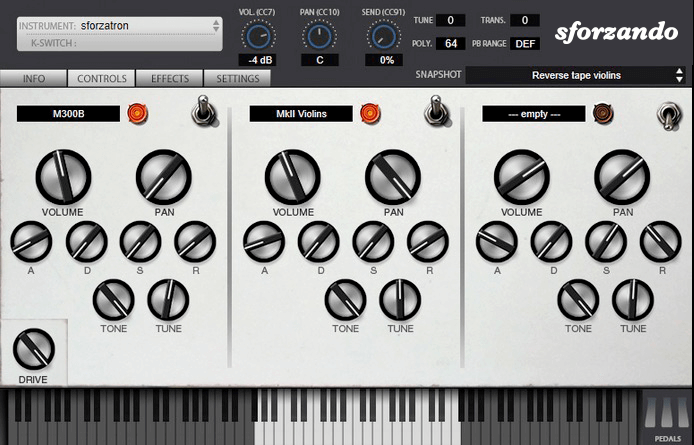
The SFZ Format is widely accepted as the open standard to define the behavior of a musical instrument from a bare set of sound recordings. Being a royalty-free format, any developer can create, use and distribute SFZ files and players for either free or commercial purposes. So when looking for flexibility and portability, SFZ is the obvious choice. That’s why it’s the default instrument file format used in the ARIA Engine.
OEM developers and sample providers are offering a range of commercial and free sound banks dedicated to sforzando. Go check them out! And watch that space often, there’s always more to come! You are a developer and want to make a product for sforzando? Contact us!
You can also drop SF2, DLS and acidized WAV files directly on the interface, and they will automatically get converted to SFZ 2.0, which you can then edit and tweak to your liking!
Download for freeInstrument BanksSupport
We do not think of Amazon as a museum. We think of it as a warehouse—a place where objects go to be stored, priced, and shipped. But in the digital age, a warehouse is also a kind of memory palace. Every product listing is a tombstone for a desire: the hiking boots you almost bought, the cast-iron skillet that promised to change your life, the strange children’s toy with the inexplicably blank stare. And at the center of each listing is the image. The perfect, sterile, glowing image.
To save an image from Amazon is to perform a small act of defiance against planned obsolescence. It is to say: This object, or at least its ghost, deserves to exist outside the algorithm.
Why go through this? On one level, it is practical. You are a designer making a mood board. You are a writer researching a story about supply chains. You are a parent trying to prove to a customer service bot that the item arrived with a crack that was not in the photo. But on a deeper level, it is existential. how to save images from amazon
We live in an era of the transient image. Social media stories vanish in 24 hours. Ads rearrange themselves based on our scrolling heartbeat. But the Amazon product image pretends to be permanent. It is not. Listings change. Sellers vanish. The "updated version" replaces the "classic." The black sweater you bought in 2019 now exists only as a gray vest in a search result. By saving that image, you are arresting a specific moment in consumer history. You are preserving the promise of an object before it was tarnished by shipping delays or the disappointment of its actual weight in your hand.
The methods themselves become a ritual. The simplest is to take a screenshot—clumsy, democratic, leaving the cursor shadow in the corner like a fingerprint. More elegant is the use of browser extensions that rip entire galleries. But the purist knows the true way: open the network tab in Developer Tools, filter by "Img," refresh the page, and watch the waterfall of assets pour down. Each thumbnail, each zoomed detail, each lifestyle shot of a happy family using a patio heater—they are all there, naked in the code. Right-click. Save As. You have stolen a piece of the machine. We do not think of Amazon as a museum
What are you really saving? Not the object itself. You cannot download a toaster. You are saving a photograph of a toaster, which is a different kind of thing. It is a hyperreal artifact: lit from three angles, shadows removed, crumbs edited out. It is a lie told in 300 DPI. And yet, that lie is often more beautiful than the truth. The real toaster will get scratched. The image will remain flawless forever.
Yet, Amazon does not want you to save its images. Not really. Right-click, and you are met with a void. The context menu is scrubbed clean, or the image is wrapped in layers of JavaScript like a museum painting behind bulletproof glass. You are allowed to look, to covet, to add to cart. But to possess the image—to download it as a file on your own hard drive—requires a detour. You must open the Developer Tools. You must hunt through the "Inspect Element" panel, sifting through divs and data-src attributes until you find the original URL, often ending in _.jpg . That underscore is a clue: it means the image has been resized, compressed, optimized for the endless scroll. You delete the size modifiers in the URL—the SX522 , the UX569 —to reveal the original, massive file. It feels like cracking a safe. Every product listing is a tombstone for a
So go ahead. Save the image. Name it something strange. Tuck it into a folder called "Reference" or "Dreams." You are not hoarding. You are archiving. In a world where every pixel is designed to be ephemeral—optimized for a single conversion, then discarded—the act of downloading is an act of love. It says: This picture of a lamp matters. Not because I will buy the lamp. But because for one moment, I saw a future where that lamp sat on my desk, and I want to remember that future, even if I never live there.