







React Logo

By Addy Osmani and Hassan Djirdeh

Code Smart, Scale Fast, Conquer Challenges

Learn tools and techniques to build and maintain large-scale React web applications.

Or  for free.
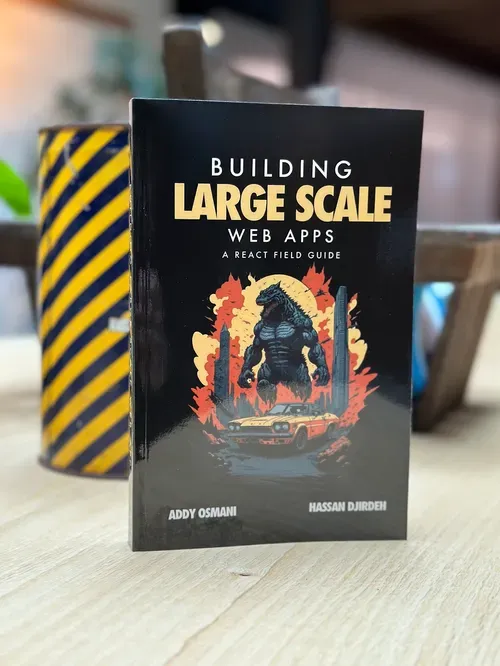
Building Large Scale Web Apps: A React Field Guide. By Addy Osmani and Hassan Djirdeh

“Building Large Scale Web Apps” is a toolkit to managing large-scale React applications.

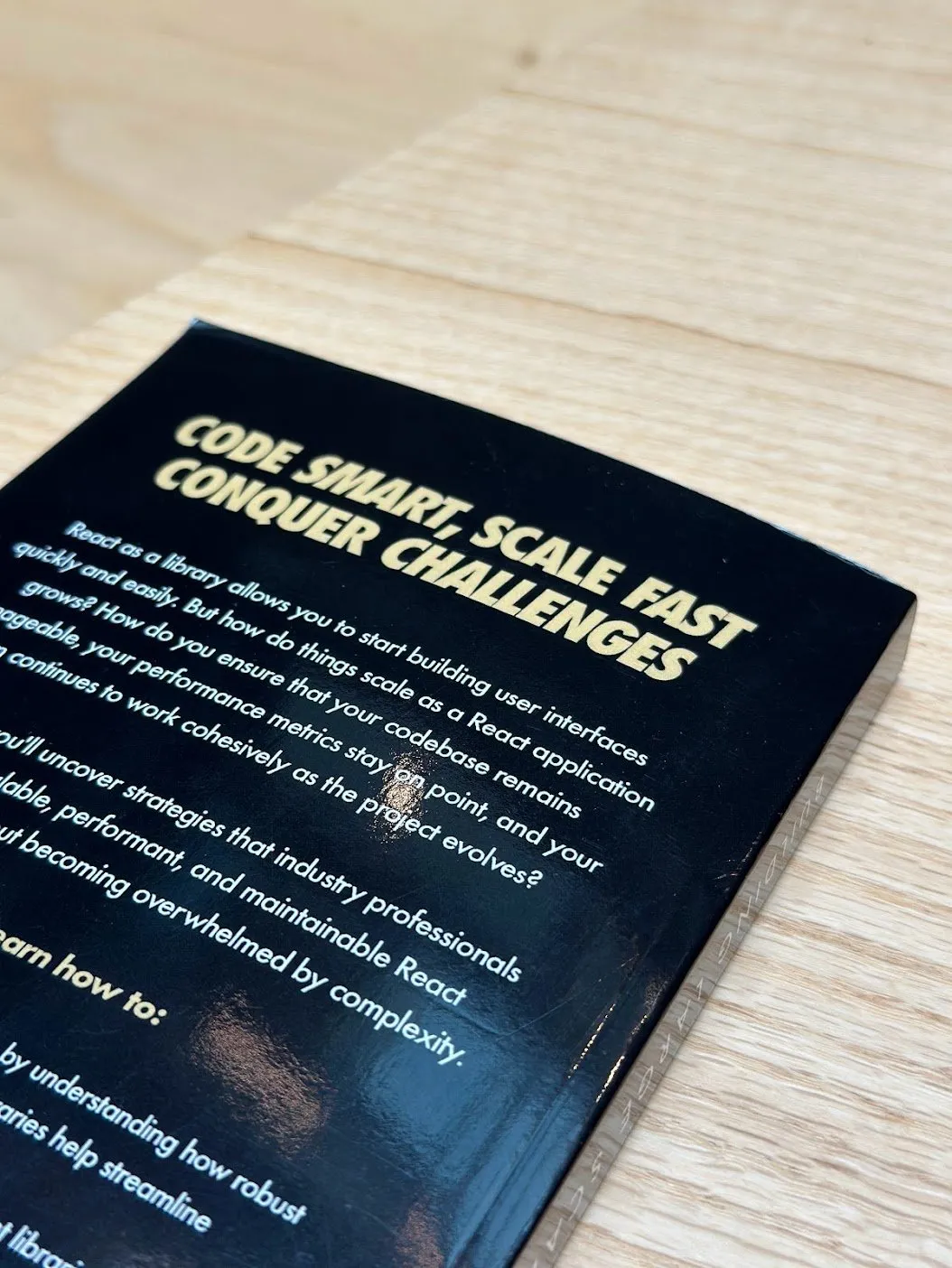
React as a library allows you to start building user interfaces quickly and easily. But how do things scale as an application grows? How do you ensure that your codebase remains manageable, your performance metrics stay on point, and your team continues to work cohesively as the project evolves?

In this book, you'll uncover strategies that industry professionals use to build scalable, performant, and maintainable React applications, all without becoming overwhelmed by complexity.

Together, we've spent well over two decades building within or consulting for

The Google logo.
The Doordash logo.
The Instacart logo.
The Netflix logo.
The X logo.
The YouTube logo.
The Shopify logo.
The Ebay logo.

The character of Detective William Murdoch (Yannick Bisson) embodies the series’ core thesis: that reason and empirical evidence will eventually triumph over superstition and institutional inertia. Murdoch’s methods—fingerprinting, blood typing, lie detection (using an early sphygmomanometer), ultraviolet light analysis, and even rudimentary psychological profiling—are presented not as magic but as emerging disciplines. Historically, the show is grounded in real innovations; for example, the first conviction based on fingerprint evidence in North America occurred in 1911, just a few years after the show’s setting. Murdoch’s devout Catholicism, however, complicates his rationalism. His periodic crises of faith (e.g., the death of a child, the existence of evil) prevent him from becoming a cold logic machine. This internal conflict reflects the broader Victorian crisis of faith spurred by Darwinism and industrialization, grounding the character’s science in human vulnerability.

Perhaps the series’ most distinctive feature is its liberal use of historical “easter eggs” and anachronistic cameos. Real historical figures appear regularly as characters: a young Winston Churchill, H.G. Wells (who time-travels), Nikola Tesla, Arthur Conan Doyle, Helen Keller, and even a pre-fame Harry Houdini. Murdoch frequently invents devices that predate their actual creation—most famously, a portable lie detector, a “telegraph for sound” (telephone), and a “moving picture camera for evidence.” This playful anachronism, bordering on steampunk, signals to the audience that the show is not a documentary. It creates a knowing wink: we, the modern viewers, recognize what Murdoch cannot fully articulate. This technique allows the series to comment on the present (e.g., surveillance, data privacy) while remaining firmly in the past.

Each episode typically follows a three-act structure: a bizarre murder, a forensic puzzle, and a courtroom or confession resolution. However, the series frequently breaks formula with holiday specials (Christmas, Halloween), musical episodes, and even a silent-film episode (“The Spy Who Loved Murdoch,” Season 14). The recurring antagonists—the charming psychopath James Pendrick, the femme fatale Sally Pendrick, and the rogue agent Terrence Meyers—introduce serialized espionage and crime syndicate arcs that contrast with the episode-of-the-week murders. This hybridity ensures longevity, as the show can pivot from a dark exploration of postpartum depression to a farcical caper about a stolen invention without losing its core identity.

If Murdoch represents the future, Inspector Thomas Brackenreid (Thomas Craig) represents the fading but necessary past. A Scottish immigrant who relies on gut instinct, physical intimidation, and a “good truncheoning,” Brackenreid initially resists Murdoch’s “newfangled contraptions.” Over fifteen seasons, however, his character arc demonstrates a grudging respect for science, even as he remains the show’s moral anchor of common sense and working-class pragmatism. Their partnership dramatizes the historical transition from the Victorian “detective as bobby” to the Edwardian “detective as expert.” Brackenreid’s famous catchphrase—“I’ll be back in a jiffy!”—and his love of a stiff drink humanize the show, ensuring that forensic detail never overwhelms character-driven storytelling.

Dr. Julia Ogden (Hélène Joy), the city’s first female pathologist, is more than a love interest; she is a full partner in the investigative process and the series’ most explicit vehicle for feminist history. Julia’s struggles—against the male-dominated medical establishment, against laws barring married women from working (a plot point that forced her to resign in Season 5), and against expectations of domesticity—reflect real early-20th-century battles. Her eventual marriage to Murdoch does not retire her character; instead, she continues to perform autopsies and consult on cases. The show also explores reproductive rights, birth control, and sexual harassment, all within a historical framework that highlights how far women have come. Notably, Julia is often the one to identify psychological motives (e.g., hysteria as a misdiagnosis for trauma), complementing Murdoch’s physical evidence.

Some other things!

Descriptive content, continous updates, and soundbites from industry professionals.

Descriptive, not prescriptive

When explaining content, we follow a descriptive approach, not prescriptive. In other words, we don’t tell you what specific tools or libraries you have to use to be successful. Rather, we focus on explaining a concept and employ certain libraries or tools to illustrate that concept.

React-focused with universal concepts

While the book is React-focused, it teaches universal concepts that transcend all web development frameworks. It's designed to enhance your understanding of building web applications that are scalable, maintainable, and adaptable, regardless of the specific technology stack.

Continous, frequent updates

Purchasing the e-book gives you access to all new content, edits, and improvements forever. In fact, we're currently working on adding three new chapters soon — Routing, User-centric API design, and React in 2024. Check out the Changelog to follow along on all the updates we'll make.

Soundbites from industry professionals

In the book, we share soundbites and thoughts from industry professionals. These soundbites are shared from start-up owners and software engineers who work at Doordash, Netflix, Spotify, and more.

Back cover of physical book
Front cover of physical book
Back cover of physical book
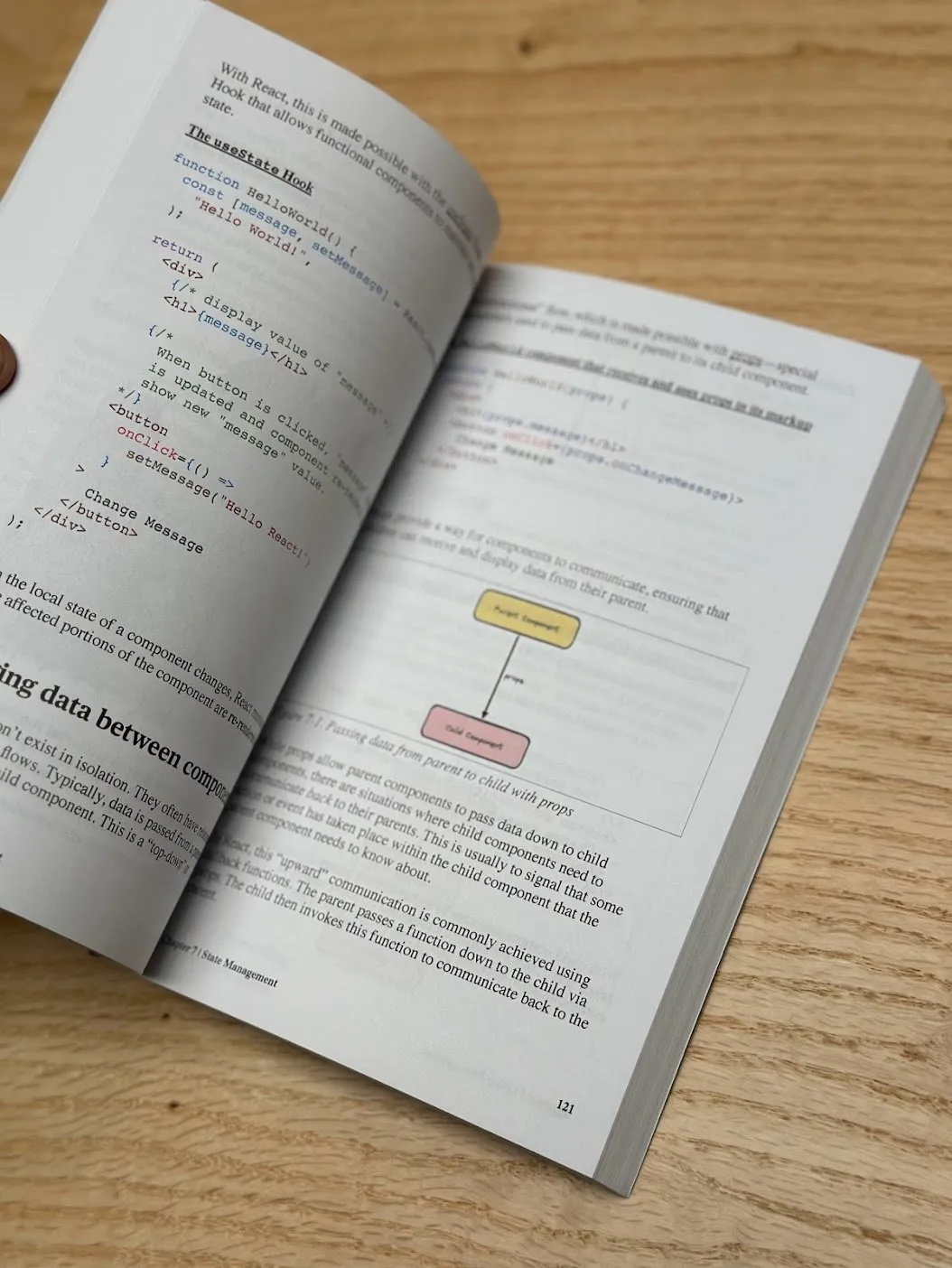
Contents of physical book

Industry nuggets

Nuggets of wisdom from industry professionals

Jem Young

Maxi Ferreira

Emma Bostian

Zeno Rocha

Francine Navarro

Jeffrey Peng

And others!

Murdoch Mysteries Series ^new^ May 2026

The character of Detective William Murdoch (Yannick Bisson) embodies the series’ core thesis: that reason and empirical evidence will eventually triumph over superstition and institutional inertia. Murdoch’s methods—fingerprinting, blood typing, lie detection (using an early sphygmomanometer), ultraviolet light analysis, and even rudimentary psychological profiling—are presented not as magic but as emerging disciplines. Historically, the show is grounded in real innovations; for example, the first conviction based on fingerprint evidence in North America occurred in 1911, just a few years after the show’s setting. Murdoch’s devout Catholicism, however, complicates his rationalism. His periodic crises of faith (e.g., the death of a child, the existence of evil) prevent him from becoming a cold logic machine. This internal conflict reflects the broader Victorian crisis of faith spurred by Darwinism and industrialization, grounding the character’s science in human vulnerability.

Perhaps the series’ most distinctive feature is its liberal use of historical “easter eggs” and anachronistic cameos. Real historical figures appear regularly as characters: a young Winston Churchill, H.G. Wells (who time-travels), Nikola Tesla, Arthur Conan Doyle, Helen Keller, and even a pre-fame Harry Houdini. Murdoch frequently invents devices that predate their actual creation—most famously, a portable lie detector, a “telegraph for sound” (telephone), and a “moving picture camera for evidence.” This playful anachronism, bordering on steampunk, signals to the audience that the show is not a documentary. It creates a knowing wink: we, the modern viewers, recognize what Murdoch cannot fully articulate. This technique allows the series to comment on the present (e.g., surveillance, data privacy) while remaining firmly in the past. murdoch mysteries series

Each episode typically follows a three-act structure: a bizarre murder, a forensic puzzle, and a courtroom or confession resolution. However, the series frequently breaks formula with holiday specials (Christmas, Halloween), musical episodes, and even a silent-film episode (“The Spy Who Loved Murdoch,” Season 14). The recurring antagonists—the charming psychopath James Pendrick, the femme fatale Sally Pendrick, and the rogue agent Terrence Meyers—introduce serialized espionage and crime syndicate arcs that contrast with the episode-of-the-week murders. This hybridity ensures longevity, as the show can pivot from a dark exploration of postpartum depression to a farcical caper about a stolen invention without losing its core identity. The character of Detective William Murdoch (Yannick Bisson)

If Murdoch represents the future, Inspector Thomas Brackenreid (Thomas Craig) represents the fading but necessary past. A Scottish immigrant who relies on gut instinct, physical intimidation, and a “good truncheoning,” Brackenreid initially resists Murdoch’s “newfangled contraptions.” Over fifteen seasons, however, his character arc demonstrates a grudging respect for science, even as he remains the show’s moral anchor of common sense and working-class pragmatism. Their partnership dramatizes the historical transition from the Victorian “detective as bobby” to the Edwardian “detective as expert.” Brackenreid’s famous catchphrase—“I’ll be back in a jiffy!”—and his love of a stiff drink humanize the show, ensuring that forensic detail never overwhelms character-driven storytelling. Perhaps the series’ most distinctive feature is its

Dr. Julia Ogden (Hélène Joy), the city’s first female pathologist, is more than a love interest; she is a full partner in the investigative process and the series’ most explicit vehicle for feminist history. Julia’s struggles—against the male-dominated medical establishment, against laws barring married women from working (a plot point that forced her to resign in Season 5), and against expectations of domesticity—reflect real early-20th-century battles. Her eventual marriage to Murdoch does not retire her character; instead, she continues to perform autopsies and consult on cases. The show also explores reproductive rights, birth control, and sexual harassment, all within a historical framework that highlights how far women have come. Notably, Julia is often the one to identify psychological motives (e.g., hysteria as a misdiagnosis for trauma), complementing Murdoch’s physical evidence.

Who we are

Heyo! We're Addy & Hassan — Engineers & Educators.

Profile picture of Addy Osmani

AddyOsmani

I'm an engineering leader working on Google Chrome and I lead up Chrome's Developer Experience organization, helping reduce the friction for developers to build great user experiences.

HassanDjirdeh

I'm a senior software engineer and have built large production web applications at organizations like Doordash, Instacart, and Shopify.

Profile picture of Addy Osmani

Pick your package

“Building Large Scale Web Apps” is available in either an e-book or as a physical copy.

E-book

Great for digital learners.

$24.99USD

  • 300+ pages
  • PDF or EPub (or both)
  • All future updates
Buy with Leanpub Or buy with Apple Books or Google Play

Physical copy (softcover)

Perfect for hands-on referencers.

$49.99USD

  • 300+ pages
  • Softcover
  • Something to put on your bookshelf
  • Interested in both the e-book and physical copy? Purchase both separately!
Buy Physical Copy

Some words from readers

Here are some things we've been hearing from our readers.

FAQ

Got questions? We've got answers.